
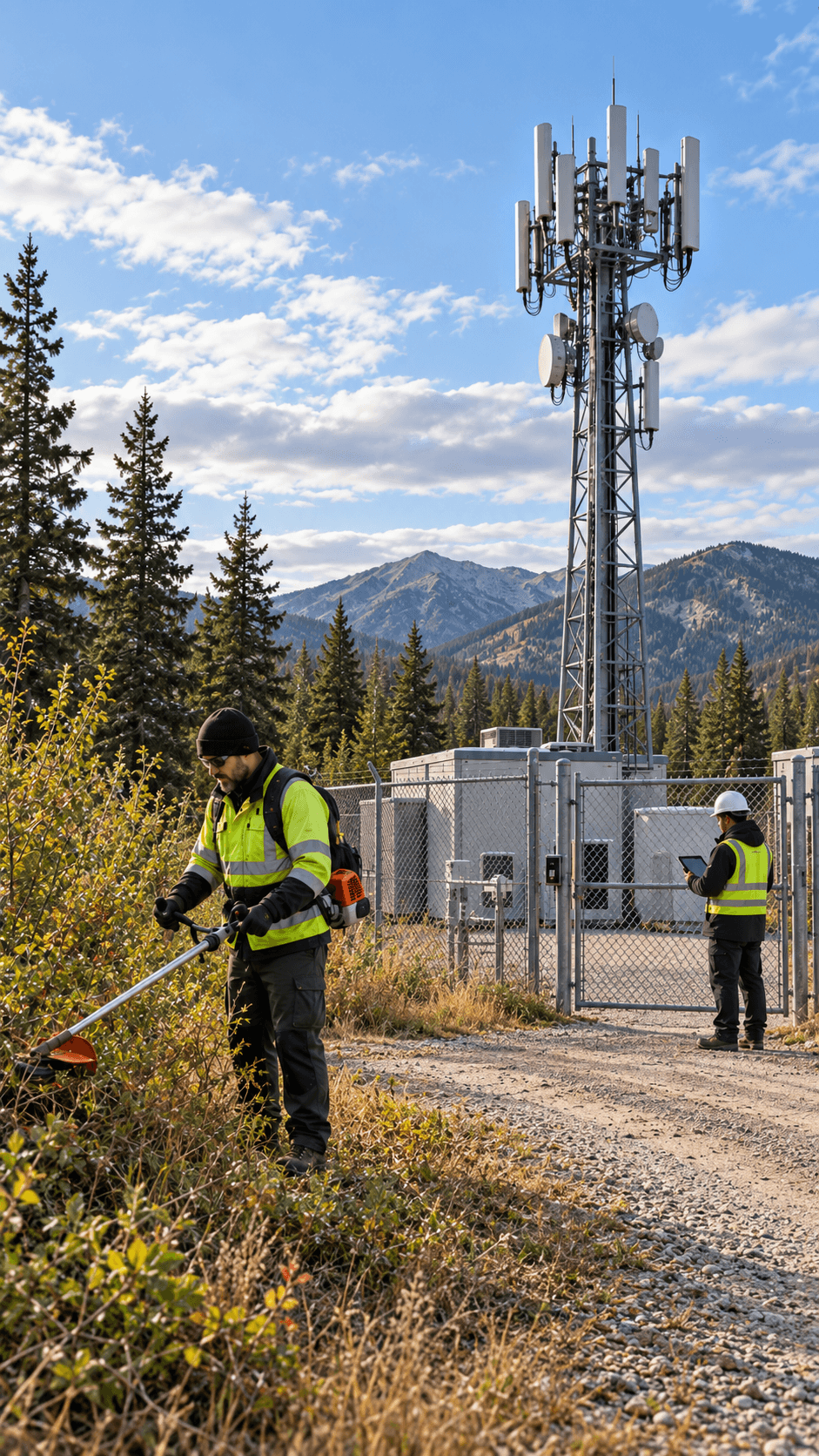
Telecom site maintenance across multiple markets needs a common operating process and reliable local execution. Each site should have a clear upkeep scope, current access instructions and evidence showing what the crew completed or could not complete.
This article covers routine property upkeep around telecom sites, such as vegetation management, litter removal and observation of access or enclosure defects. Tower climbing, radio work, electrical repairs and other technical infrastructure services require separately defined scope and suitable authorization.
How Telecom Site Maintenance Is Organized Across Markets
An operator may coordinate upkeep centrally while local providers perform the visits. Regional teams can oversee coverage, and individual sites retain instructions for access, maintained boundaries and reporting. The arrangement should fit the operator’s ownership and lease responsibilities.
Use a stable site identifier across schedules, reports and invoices. A street address can be insufficient for a rooftop installation, a compound within a larger property or several assets sharing one location.
Separate planned visits from defect response. A crew may discover vegetation blocking access during scheduled upkeep, while a damaged lock may require a different contractor. Both records should connect to the site without implying that the same crew is authorized to resolve every issue.
What a Site Visit Typically Includes
The scope may include cutting approved vegetation, removing litter and keeping designated access areas clear. Specify the area to be maintained, expected finish and exclusions around equipment, cables and adjoining property. For vegetation work in detail, see vegetation management at cell tower and telecom sites.
Observation of visible conditions can be part of the visit. Crews can report a damaged gate or apparent obstruction without diagnosing technical equipment. Give them a concise checklist showing what to document and who receives the report.
| Visit task | Scope detail to establish | Completion record |
|---|---|---|
| Vegetation management | Maintained boundary and protected areas | Views of agreed areas after service |
| Litter removal | Included waste and excluded materials | Cleared-area photos and exception notes |
| Access upkeep | Authorized paths and limits of work | Obstruction status and affected location |
| Enclosure observation | Visible gate and fence conditions | Photographs of observed defects |
| Condition reporting | Observations requested by the operator | Site identifier, finding and escalation |
Chemical vegetation treatment, specialist waste handling and substantial access-road work need separate confirmation of qualifications and permissions. A general grounds scope should not quietly expand to include them.
Access, Security and Compliance Constraints
Access arrangements affect whether a visit can happen at all. Confirm landowner permissions, check-in requirements and permitted work hours. Manage credentials through an approved process, with access limited to the personnel who need it.
The operator should communicate restricted areas and site hazards before dispatch. A ground-maintenance crew should stop and escalate when the work would enter an area beyond its authorization. Access to a compound does not authorize work on its technical infrastructure.
The Occupational Safety and Health Administration’s communication tower guidance identifies hazards associated with technical tower work, including falls and electrical hazards. Keep the routine property upkeep agreement clear about which work is excluded and how concerns are referred to qualified personnel.
Store only the service information needed in routine completion reports. Avoid placing access codes or unnecessary details of sensitive equipment in broadly shared photo records.
Coordinating Hundreds of Remote Sites
Create a site register with market, visit schedule, scope, access requirements and responsible contacts. Group work where travel and local capacity make that practical, but retain the individual site record. A route marked complete should not close every site automatically.
Scheduling should reflect seasonal growth, access windows and property conditions. High-priority access issues may need separate dispatch rather than waiting for the next maintenance route. Define who can change the schedule and approve additional work.
Track exceptions separately from completed visits. A site inaccessible because of a locked gate needs an owner and a next attempt. Report it promptly so the operator can correct the access problem before the next route is planned.
Where Local Vendor Networks Become Harder to Manage at Scale
Local providers can perform well. The difficulty comes when each market has a different reporting format, service interpretation and escalation contact. Portfolio teams then spend time translating updates and chasing missing information.
Coverage can also change when a vendor leaves a market or cannot cover a route. Keep backup arrangements current and check the replacement provider’s ability to follow the site’s instructions. A name on a vendor list does not establish usable capacity.
A centralized relationship can help coordinate these tasks when accountability is clear. The same single-source service principles apply: the partner needs to manage local delivery and exceptions within the contracted scope.
Reporting and Verification for Unmanned Sites
A useful completion record identifies the site, visit time, work performed and unresolved conditions. Require photographs that cover the agreed maintained areas rather than a generic image of the gate. Connect any defect report to a follow-up work order.
If the provider uses timestamp or location controls, confirm what they establish and what happens when mobile connectivity is limited. A crew’s attendance record supports presence at the site; acceptance still depends on evidence of the contracted work.
Review repeat exceptions. Several failed visits at one site may point to outdated access instructions. Repeated vegetation problems may indicate a mismatch between frequency and growth conditions. Use the history to change the service plan rather than reopening the same issue indefinitely.
What to Require from a Telecom Site Maintenance Provider
Evaluate coverage against the named sites and exact service categories. Confirm crew training for the assigned work, insurance, subcontracting arrangements and backup capacity. Require an access process that matches the operator’s security requirements.
The proposal should address:
- Property upkeep boundaries and excluded technical work;
- Seasonal frequency and route planning;
- Failed-access reporting and repeat-visit charges;
- Approved evidence and protection of sensitive information;
- Response ownership for reported defects;
- Invoices linked to individual site records.
HiredHelpr’s commercial property maintenance services cover grounds care and recurring property upkeep through a national network of vetted vendors, with one service record per site. Tower climbing and network maintenance are outside that scope, which keeps the boundary between property upkeep and technical infrastructure clear.
Telecom Site Upkeep Works When Every Site Has Its Own Record
Routine upkeep across hundreds of telecom sites stays manageable when each site has a clear boundary, current access instructions and a completion record that shows what was done. Keep technical work separate, and use the site history to adjust frequency and access plans.
The proposal points above can be used as the HiredHelpr Telecom Site Upkeep Checklist when comparing providers across markets.
Contact HiredHelpr to discuss your portfolio, service requirements and coverage needs.
Frequently Asked Questions
Does telecom site maintenance include tower climbing?
Only when separately specified and performed by suitably qualified and authorized personnel. Routine property upkeep should identify tower climbing and technical infrastructure work as outside its scope unless the agreement explicitly covers them.
How often should vegetation be maintained at telecom sites?
Set frequency according to local growth conditions, the maintained area and the required access standard. Review service records during the growing season and adjust when the contracted schedule consistently leaves the site outside the agreed condition.
Should inaccessible sites be billed as completed service?
Record them as access failures rather than completed upkeep. The contract may allow an attempted-visit charge, but it should state the evidence required, notification process and terms for another visit.
Can one provider cover every site in every market?
Coverage needs to be verified against the actual site list and tasks. Ask for confirmed capacity, exclusions and replacement arrangements. A national service claim alone does not establish access or delivery capability at a particular site.